 | |||
|  |  |
 |  |
 |  | ||
 |  | ||
 |  | ||
| |||
|
| | |
| |
| | ||
| | ||
| | ||
Written by Paul D. Race for
 and and  |
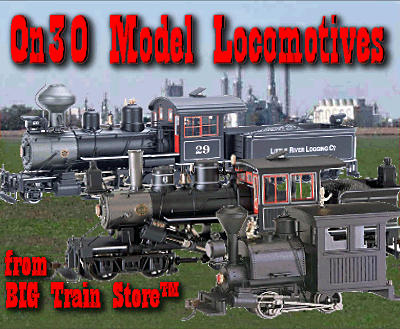
 On30 Model Locomotives from BIG Train StoreTM
Since Bachmann introduced its line of On30 trains, model railroaders from many scales have noticed the unique potential of these trains. They are models of narrow gauge railroads, which tended to have relatively small trains and equipment. And this, in turn, allows you to fit a lot of model railroading into very small space without using trains so small that you can't really see what's going on half the time.
Bachmann's first On30 train sets used a "Mogul" 2-6-0 locomotive that was a model of a popular Baldwin locomotive first made in the late 1800s. These moguls were used into the 1930s by narrow gauge railroads to haul both freight and passenger trains. But user soon expressed in interest in having bigger freight haulers as well as smaller industrial-style locomotives. And Bachmann made both, providing many opportunities for modeling different kinds of railroads.
Note about DCC: For "serious" model railroaders, some of the locomotives on this page include a built-in DCC decoder. This is a feature that allows you to control more than one train on the same track, if you also purchase the Bachmann DCC Controller
Update for 2015 - Just before the recession hit, Bachmann introduced a wide variety of On30 steam locomotives. But when the recession hit, the stores stopped ordering trains. At least one big chain went out of business owing their suppliers real money. Several model train manufacturers actually went out of business. Bachmann managed to hang on, but they aren't producing many new On30 locomotives at the moment. Between November 2013 and September 2014, almost every single locomotive I had listed on this page sold out. A few more have sold out since. So now, I'm including links to Amazon search screens you can use to look for similar locomotives in case the one I pictured is gone. In addition, if you go to the Amazon page for an item, be sure and scroll down to the "Customers Who Viewed This Item Also Viewed" section, in case something new has been added at the last minute.
That said, almost all of the Bachmann On30 locomotives that are listed on Amazon (even the ones I don't specifically list) are "onesies and twosies," leftovers from earlier runs. So if you see something you like don't wait too long.
Note about Availability and Pricing: Before Bachmann started making On30 trains, only a few handcrafted brass pieces a year were usually available for On30 hobbiests, and the market was very small. The number of people modeling any particular narrow gauge line was even smaller (unless you count Rio Grande, which has a relatively large following). To this day, Bachmann tends to make relatively small runs of most On30 products. For example, they may order one batch of an East Broad Top (EBT) set, then not make another EBT set again until they've also modeled a dozen other lines. So if you see any On30 products for a railroad you want to model, get them now - they may not be available for long, and once they become unavailable, they may remain so for years. If you "click through" to see details on a product, and nothing happens at all, or you are routed to a supplier's home page, please let me know and I will remove the product from the buyer's guide until I can find a replacement or another supplier. For more detailed information about why products seem to come and go and why I have stopped listing prices for certain products, please see my article "About Pricing and Availability."
Note about Suppliers: While we try to help you get the trains and other products you want by recommending suppliers with a good record of customer service, all transactions between you and the supplier you chose to provide your trains are governed by the published policies on the supplier's web site. So please print off any order confirmation screens and save copies of invoices, etc., so you can contact the appropriate supplier should any problems occur. (They almost never do, but you want to be on the safe side.)
|
Porter's "tank" engines had no tenders. Instead the water they needed was carried in tanks right on the locomotive. On this model, the tank wraps around the boiler, giving the locomotive a "potbelly" appearance. Without a tender, an engineer could switch cars much more efficiently, and the weight of the water over the axles gave tank engines additional traction. This helped make Porter's tank engines mighty for their size - they could fit almost anywhere, pulling heavy loads over hastily-laid track. Though the earliest Porters were build well before the turn of the century, many stayed in service until well into the 1950s. This model has vertical panelling to represent a wooden cab. It is painted a soft black color but has no road name in case you want to add your own. Features of this model include:
For a non-sound version (which is slightly older stock and somewhat cheaper),
A Unlettered DCC-equipped 0-4-0T with Horizontal Panels. This is another version of the Porter 0-4-0T. Its cab represents a slightly different construction, which could represent "all-metal," however. This one has DCC, but not sound. It is slightly older stock but costs less, so that's a plus.
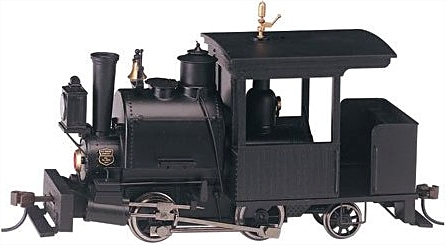
Paneled, Unlettered 0-4-2T - When a Porter might have to go beyond easy access to fuel, the Porter company recommended these 0-4-2T locomotives. The non-powered trailing wheels supported an extra-large fuel compartment. A special counterbalancing design kept most of the weight on the drivers, though. Like their little 0-4-0T brothers, these Porters could run on almost any kind of track. This model has all of the same features as the 0-4-0T described above. The cab on this version represents a wooden panel.
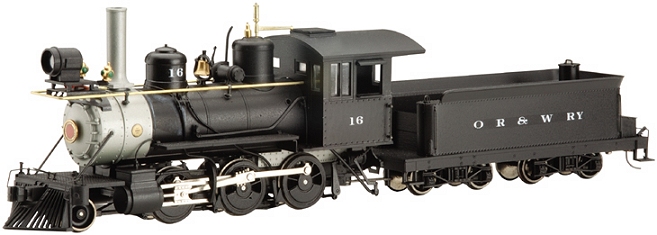 Bachmann Spectrum Ohio River and Western Mogul - During and just after the American Civil War, most locomotives had four "pilot wheels" (which helped to steer the engine around curves) and four "drivers," which delivered steam power to the tracks. But as boilers became more efficient, it proved possible to get enough power to drive six drivers with the same size of boiler. So the Mogul, which was named after the railroad "barons" of the late 1800s, traded a pair of pilot wheels for a pair of drivers and "never looked back." Eventually larger railroads made their locomotives bigger and added many more wheels, but the Mogul was suprisingly useful for short passenger hauls and fast freight where a bigger locomotive would have been "overkill." Narrow-gauge Baldwin-built Moguls like this model could be seen in most parts of the country right up until 1930, when many smaller railroads were forced to close, taking their hardworking equipment with them. Bachmann Spectrum Ohio River and Western Mogul - During and just after the American Civil War, most locomotives had four "pilot wheels" (which helped to steer the engine around curves) and four "drivers," which delivered steam power to the tracks. But as boilers became more efficient, it proved possible to get enough power to drive six drivers with the same size of boiler. So the Mogul, which was named after the railroad "barons" of the late 1800s, traded a pair of pilot wheels for a pair of drivers and "never looked back." Eventually larger railroads made their locomotives bigger and added many more wheels, but the Mogul was suprisingly useful for short passenger hauls and fast freight where a bigger locomotive would have been "overkill." Narrow-gauge Baldwin-built Moguls like this model could be seen in most parts of the country right up until 1930, when many smaller railroads were forced to close, taking their hardworking equipment with them.
This model is an upgraded version of the locomotive included with most Bachmann On30 Starter Sets. Features of this model include:
 To check on price or availability, please click a vendor button to the right. To check on price or availability, please click a vendor button to the right.
This model represents a 28-ton engine that was produced until 1904 and continued in scattered service into the early 1950s. Features of Bachmann's Climax models include:
Features of Bachmann's Stearns-Heisler models include:
This example is unlettered so you can add your own road name, but has DCC control technology.
This example has "all the bells and whistles," literally. Some of the other Forneys on the link below this one will be a tad less expensive, but won't have all the features.
|
Note: If you're looking for:
To return to the On30 Trains page, click here.
|
|

| |
 |
 |  |  |
Note: Family Garden Trains(tm) and Big Christmas Trains(tm) are trademarks of Breakthrough Communications (www.btcomm.com). All information, data, text, and illustrations on this web site are
Copyright (c) 1999, 2000, 2001, 2002, 2003, 2004, 2005, 2006, 2007, 2008, 2009, 2010, 2011, 2012, 2013 by Paul D. Race.
Reuse or republication without prior written permission is specifically
forbidden.
Big Train Store(tm) is a participant in the Amazon Services LLC Associates Program, an affiliate advertising program designed to provide a means for sites to earn advertising fees by advertising and linking to amazon.com.
For more information, please contact me
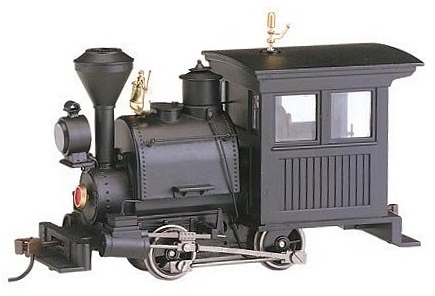
 To check price and availability, click on a vendor button to the right.
 click the button to the right.
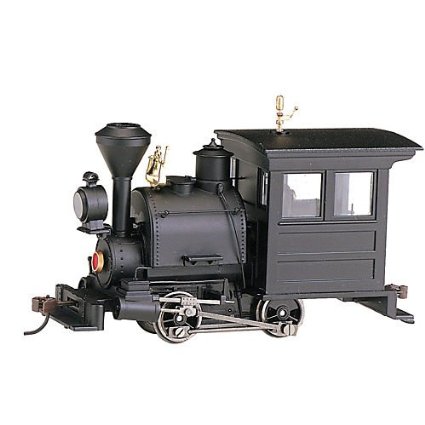
 To check price and availability, click on a vendor button to the right.
 Note: If the above porters are out of stock by the time you get to this page, click the button to the right to see the other Bachmann On30 Porters that Amazon has listed.
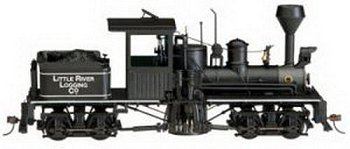
 To check price and availability, click on a vendor button to the right.
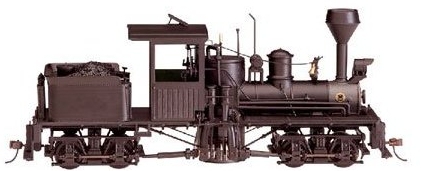
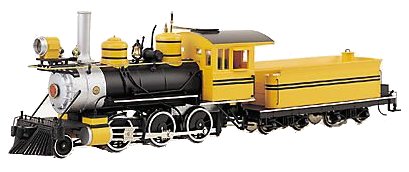
 To check stock on Amazon, click the button to the right.
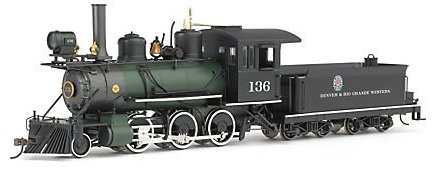
 Ooops, we just found another On30 mogul that was crossreferenced wrong. it's a On30 Spectrum 2-6-0, D&RGW #136, which is a very pretty locomotive in my opinion. Click on the button to the right to jump to the description.
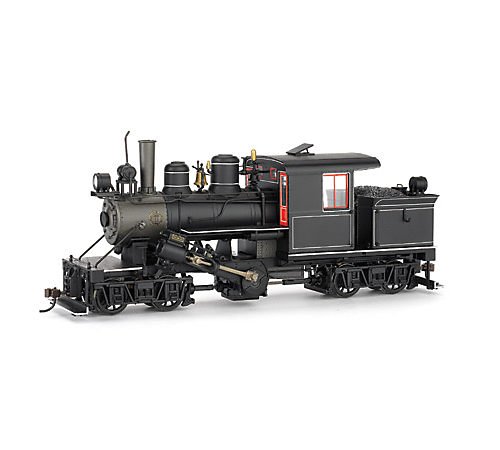
 To check price and availability on the Unlettered Climax, click on the button to the right.
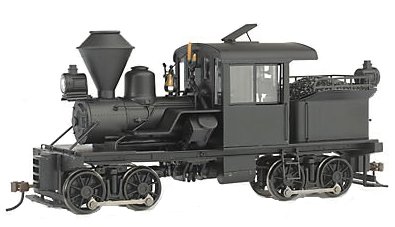
 To check price and availability on the Unlettered Stearns-Heisler, click on the button to the right.

 To check price and availability on the On30 Spectrum 4-6-0 w/DCC & Sound, Black/Red/White , click on the button to the right.

 To check price and availability on the On30 Spectrum 4-4-0 w/DCC , click on the button to the right.
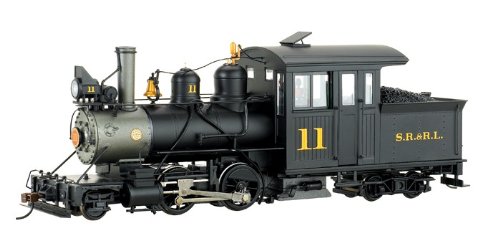
 To check price and availability on the On30 Spectrum 2-4-4T Forney w/DCC and sound, click on the button to the right.